No 37. Why I Believe the AI Era Is the Best Time for Product Designer?
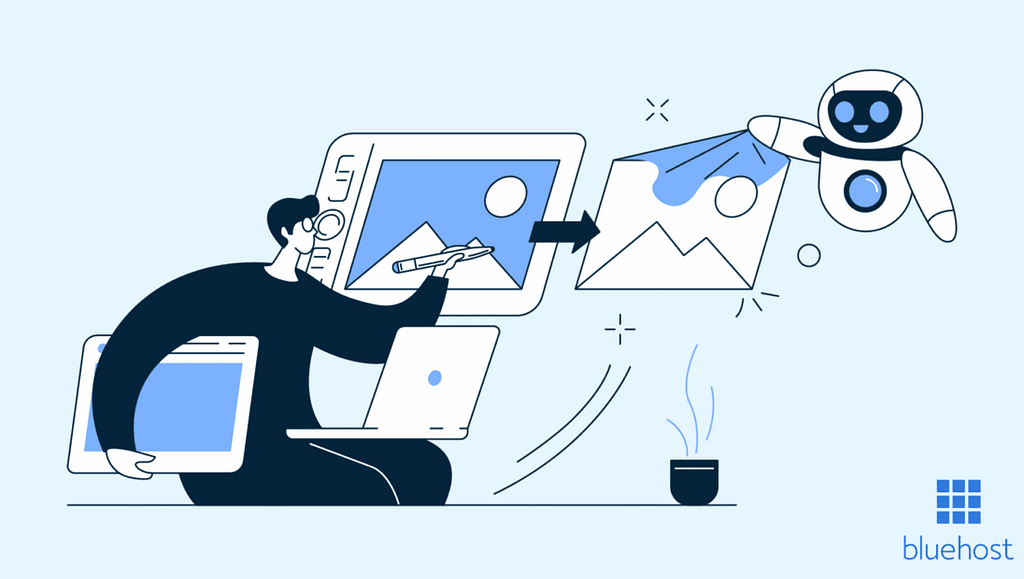
When Gemini 3 launched, it felt like the design industry collectively paused for a moment. Not in confusion — but in the realization that something irreversible had just happened.
For the first time, we could see with absolute clarity:
AI is no longer just a tool. It has begun taking over the most basic, most repeatable tasks in the design value chain.
This shift didn’t happen overnight, but Gemini 3 made it visible.
AI can now sketch, wireframe, rewrite UX copy, generate concepts, render visuals, and even simulate user flows. And it can do these things faster than any junior designer ever could.
Naturally, the questions started bubbling up:
“Are designers about to be replaced?”
“If AI can do the first 30% of our job, what’s left for us?”
“What is the role of a designer when production is nearly free?”
But over the past few months — through experimenting with new tools, coaching candidates, and working on AI-integrated products — I’ve noticed a few unmistakable patterns. Patterns that don’t point to replacement, but to redefinition.
This is not the end of design.
It’s the beginning of a new golden era.
1. The Entire Foundation of Design Workflow Is Being Rewritten
For the past decade, design has lived inside a predictable, linear: process:research → sketches → wireframes → hi-fi → handoff → iteration.
This model assumes a slow-moving world, where each stage requires manual effort and time to produce artifacts.
Gemini 3 disrupted every stage.
AI collapses the entire chain.
A designer can now say:
“Generate five concepts for a teen-focused savings app, with two alternative onboarding flows. Use a playful visual tone.”
And within seconds, they get:
- competitive audit summaries
- user personas
- user journeys
- wireframes
- UI explorations
- UX writing drafts
- edge cases
- accessibility notes
This is not “speeding up work” —
it’s redesigning the nature of work.
Designers no longer stand at the “beginning” or “end” of the process.
We stand across it. We’re no longer just executing methods; we’re orchestrating the system.
The essential question becomes:
Not “How do I do this task?”
but “What deserves to be done, and why?”
And that shift pulls us into a much more strategic orbit.
2. Designers Are Evolving From Executors to Sensemakers & Decision-Makers
When execution becomes cheap, the only scarce value left is judgment.
I see two types of judgment rising in importance:
1️⃣ Problem Framing: Deciding What Matters
AI can make things.
But it cannot yet decide what is worth making.
In AI-native product design, the most valuable skill is the ability to:
- identify invisible opportunities
- frame ambiguous problems
- decide where the product can deliver real value
- align user needs with business strategy
- define the “why now?”
This is the work that truly moves organizations forward — and AI can’t autonomously do it.
2️⃣ Taste & Judgment: Curating, Not Generating
If AI gives you 50 versions of a flow:
- which one aligns with the product’s north star?
- which one supports user motivation?
- which one is technically feasible?
- which one scales across markets and personas?
Taste isn’t just aesthetics.
It’s pattern recognition + principles + constraints + prioritization.
Great designers will become more like:
- editors
- curators
- strategists
- creative directors
- product thinkers
This is where human experience becomes irreplaceable.
3. The Next Three Years Are a Golden Window for Product People
I’ve been telling my mentees and teams:
If you’re a product designer, the next three years might be the best chance to leapfrog your career.
Why?
Because the industry is in a transitional state:
AI is powerful, but not yet fully understood.
Most companies don’t know how to integrate it into workflows.
Teams are hungry for guidance but lack frameworks.
This creates a temporary asymmetry —
those who learn fast become leaders fast.
Here’s where the biggest opportunities lie.
Opportunity 1: Become an AI-Native Designer
AI-native designers:
- design with AI, not just besides it
- know how to prompt, steer, refine, and chain tools
- understand how models behave
- know how to translate insights into product decisions
- design for multimodal AI, not static screens
- can produce 10x volume of ideas in the same time
This is a generational skill shift—like moving from print to digital, or from web to mobile.
Most designers haven’t adapted.
If you do, you instantly stand out.
Opportunity 2: Deep Fusion of Design + Product
AI collapses execution time. What’s left is strategy.
I see more designers stepping into PM responsibilities. The blurry line between PM and designer becomes even blurrier. In this new era, designers with product chops become unstoppable.
Opportunity 3: Multimodal Experience Design
This is the most exciting one for me.
AI is no longer just text or visuals.
It’s voice, vision, memory, context, emotion, and intent.
This creates entirely new canvases:
- voice-first interfaces
- ambient experiences
- embodied agents
- spatial and mixed reality driven by AI
- real-time personalized UX
- “intent-based” interactions where users say what they want and the system executes
This isn’t incremental.
It’s a paradigm shift as big as the jump from desktop to mobile.
The next billion-dollar products will come from here.
Opportunity 4: Become the AI Driver in Your Team
This is the most accessible one.
You don’t need to be an expert.
You just need to take initiative.
You can start small:
- redesign internal workflows
- create AI-assisted design guidelines
- run weekly AI demos
- lead tiny pilots for “AI + product” features
- run a workshop on multimodal UX
- help PMs ideate with AI
- help engineers visualize system diagrams
Teams are desperate for someone who can translate AI from buzzwords into real practice. If you do this consistently, you quickly become the person everyone relies on.
Last summer, I built a few small vibe-coding AI prototypes. A VP noticed them and invited me to host weekly sessions for the whole org for a month.
That experience alone changed the trajectory of my year.
Sometimes, visibility is created by initiative, not permission.
A Turning Point — and a Personal Reflection
I’ve lived through several industry shifts — mobile-first, cloud, SaaS, platformization. But the current AI wave feels different.
It’s one of those rare moments when an entire industry is being re-architected in real time, and anyone who chooses to learn can get ahead.
Because despite all the uncertainty, one thing is clear to me:
This is not the decline of design.
This is the reinvention of it.
And I’m genuinely excited to see who steps forward.
No 37. Why I Believe the AI Era Is the Best Time for Product Designer? was originally published in UX Planet on Medium, where people are continuing the conversation by highlighting and responding to this story.
المصدر: المصدر الأصلي
{“@context”:”https://schema.org”,”@type”:”NewsArticle”,”headline”:”No 37. Why I Believe the AI Era Is the Best Time for Product Designer?”,”description”:”
When Gemini 3 launched, it felt like the design industry collectively paused for a moment. Not in confusion — but in the realization that something irreversible had just happened.
For the first time, we could see with absolute clarity:
AI is no longer just a tool. It has begun taking over the most basic, most repeatable tasks in the design value chain.
This shift didn’t happen overnight, but Gemini 3 made it visible.
AI can now sketch, wireframe, rewrite UX copy, generate concepts, render visuals, and even simulate user flows. And it can do these things faster than any junior designer ever could.
Naturally, the questions started bubbling up:
“Are designers about to be replaced?”
“If AI can do the first 30% of our job, what’s left for us?”
“What is the role of a designer when production is nearly free?”
But over the past few months — through experimenting with new tools, coaching candidates, and working on AI-integrated products — I’ve noticed a few unmistakable patterns. Patterns that don’t point to replacement, but to redefinition.
This is not the end of design.
It’s the beginning of a new golden era.
1. The Entire Foundation of Design Workflow Is Being Rewritten
For the past decade, design has lived inside a predictable, linear: process:research → sketches → wireframes → hi-fi → handoff → iteration.
This model assumes a slow-moving world, where each stage requires manual effort and time to produce artifacts.
Gemini 3 disrupted every stage.
AI collapses the entire chain.
A designer can now say:
“Generate five concepts for a teen-focused savings app, with two alternative onboarding flows. Use a playful visual tone.”
And within seconds, they get:
- competitive audit summaries
- user personas
- user journeys
- wireframes
- UI explorations
- UX writing drafts
- edge cases
- accessibility notes
This is not “speeding up work” —
it’s redesigning the nature of work.
Designers no longer stand at the “beginning” or “end” of the process.
We stand across it. We’re no longer just executing methods; we’re orchestrating the system.
The essential question becomes:
Not “How do I do this task?”
but “What deserves to be done, and why?”
And that shift pulls us into a much more strategic orbit.
2. Designers Are Evolving From Executors to Sensemakers & Decision-Makers
When execution becomes cheap, the only scarce value left is judgment.
I see two types of judgment rising in importance:
1️⃣ Problem Framing: Deciding What Matters
AI can make things.
But it cannot yet decide what is worth making.
In AI-native product design, the most valuable skill is the ability to:
- identify invisible opportunities
- frame ambiguous problems
- decide where the product can deliver real value
- align user needs with business strategy
- define the “why now?”
This is the work that truly moves organizations forward — and AI can’t autonomously do it.
2️⃣ Taste & Judgment: Curating, Not Generating
If AI gives you 50 versions of a flow:
- which one aligns with the product’s north star?
- which one supports user motivation?
- which one is technically feasible?
- which one scales across markets and personas?
Taste isn’t just aesthetics.
It’s pattern recognition + principles + constraints + prioritization.
Great designers will become more like:
- editors
- curators
- strategists
- creative directors
- product thinkers
This is where human experience becomes irreplaceable.
3. The Next Three Years Are a Golden Window for Product People
I’ve been telling my mentees and teams:
If you’re a product designer, the next three years might be the best chance to leapfrog your career.
Why?
Because the industry is in a transitional state:
AI is powerful, but not yet fully understood.
Most companies don’t know how to integrate it into workflows.
Teams are hungry for guidance but lack frameworks.
This creates a temporary asymmetry —
those who learn fast become leaders fast.
Here’s where the biggest opportunities lie.
Opportunity 1: Become an AI-Native Designer
AI-native designers:
- design with AI, not just besides it
- know how to prompt, steer, refine, and chain tools
- understand how models behave
- know how to translate insights into product decisions
- design for multimodal AI, not static screens
- can produce 10x volume of ideas in the same time
This is a generational skill shift—like moving from print to digital, or from web to mobile.
Most designers haven’t adapted.
If you do, you instantly stand out.
Opportunity 2: Deep Fusion of Design + Product
AI collapses execution time. What’s left is strategy.
I see more designers stepping into PM responsibilities. The blurry line between PM and designer becomes even blurrier. In this new era, designers with product chops become unstoppable.
Opportunity 3: Multimodal Experience Design
This is the most exciting one for me.
AI is no longer just text or visuals.
It’s voice, vision, memory, context, emotion, and intent.
This creates entirely new canvases:
- voice-first interfaces
- ambient experiences
- embodied agents
- spatial and mixed reality driven by AI
- real-time personalized UX
- “intent-based” interactions where users say what they want and the system executes
This isn’t incremental.
It’s a paradigm shift as big as the jump from desktop to mobile.
The next billion-dollar products will come from here.
Opportunity 4: Become the AI Driver in Your Team
This is the most accessible one.
You don’t need to be an expert.
You just need to take initiative.
You can start small:
- redesign internal workflows
- create AI-assisted design guidelines
- run weekly AI demos
- lead tiny pilots for “AI + product” features
- run a workshop on multimodal UX
- help PMs ideate with AI
- help engineers visualize system diagrams
Teams are desperate for someone who can translate AI from buzzwords into real practice. If you do this consistently, you quickly become the person everyone relies on.
Last summer, I built a few small vibe-coding AI prototypes. A VP noticed them and invited me to host weekly sessions for the whole org for a month.
That experience alone changed the trajectory of my year.
Sometimes, visibility is created by initiative, not permission.
A Turning Point — and a Personal Reflection
I’ve lived through several industry shifts — mobile-first, cloud, SaaS, platformization. But the current AI wave feels different.
It’s one of those rare moments when an entire industry is being re-architected in real time, and anyone who chooses to learn can get ahead.
Because despite all the uncertainty, one thing is clear to me:
This is not the decline of design.
This is the reinvention of it.
And I’m genuinely excited to see who steps forward.
No 37. Why I Believe the AI Era Is the Best Time for Product Designer? was originally published in UX Planet on Medium, where people are continuing the conversation by highlighting and responding to this story.
“,”datePublished”:”2025-12-16 11:30:46″,”author”:{“@type”:”Organization”,”name”:”العربية”},”publisher”:{“@type”:”Organization”,”name”:”Newsly”,”url”:”http://wordpress-hr2d6.wasmer.app”},”image”:”https://cdn-images-1.medium.com/max/1024/1*n8jXAJkJhCcOQKNJTHWYIw.png”}

Post Comment